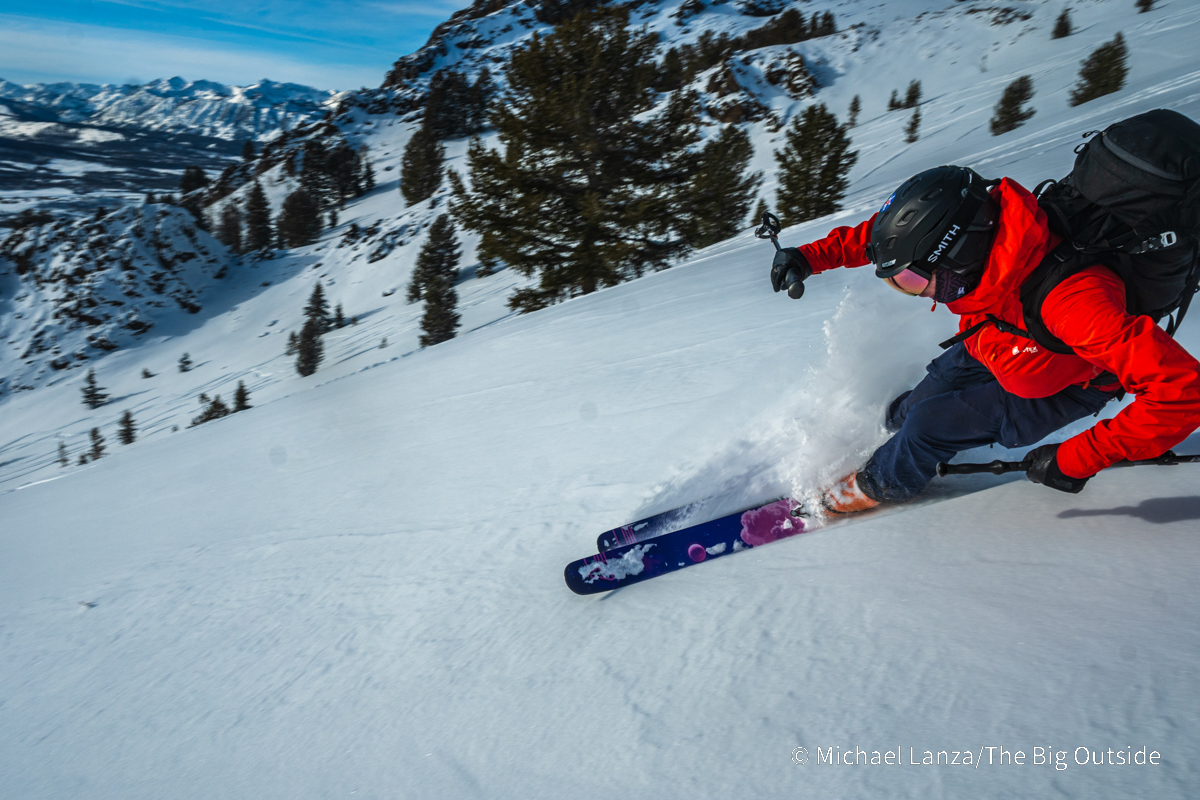
By Michael Lanza
Are you looking for gloves that keep your hands warm and dry in all seasons—yes, in winter, of course, but also models for spring through fall—and are made to last for years? As a professional gear reviewer who gets cold hands easily and spends many days outside year-round, from resort, backcountry, and Nordic skiing in the deep cold of winter to hiking and backpacking, trail running, biking around town, and working outside in cool temps at any time of year, I’ve used many types of gloves and learned a lot over the past three decades about how to select the right gloves for a variety of uses.
This review covers the best gloves for a wide range of purposes and temperatures in all seasons, from the 40s and 30s Fahrenheit to far below freezing. I’ve tested them in snowstorms, icy wind, every kind of frozen precipitation, and raw, rainy days; and through countless days of various modes of skiing and many types of multi-day backcountry trips, from chilly outings in the mountains to yurts in winter—as well as shoveling snow and doing yard work in the cold.
I bring to this job three decades of experience field-testing and reviewing outdoor gear and apparel, including the 10 years I spent as the lead gear reviewer for Backpacker magazine and even longer running this blog.
 Hi, I’m Michael Lanza, creator of The Big Outside. Click here to sign up for my FREE email newsletter. Join The Big Outside to get full access to all of my blog’s stories. Click here for my e-books to classic backpacking trips. Click here to learn how I can help you plan your next trip.

I’ve learned to identify the large and small differences between excellent, mediocre, and poor gear—and even more importantly, to help readers understand what activities or uses a piece of apparel or gear is best for.
Besides coming in a range of prices and styles, the gloves reviewed below have different strengths and weaknesses, making each better for varying activities and circumstances, which I specify in each review. I’m confident you’ll find a pair (or more than one) here that meets your needs—and you’ll find the best prices at the affiliate links in each review below. You can support my work by making purchases through those links (at no cost to you). Thanks for that.
See also my picks for “The Best Mittens for Winter.”
If you have a question for me or a comment on this review or any gloves in it, or other gloves to recommend, please share it in the comments section at the bottom of this story. I try to respond to all comments.
Scroll past the tips on how to choose gloves if you want to jump directly into the glove reviews.
Looking for the best outdoor adventures, gear reviews, and expert tips?
Start at The Big Outside’s home page!

Two Types of Gloves
For purposes of organizing this article simply, I divide the reviews below into two types of gloves—under-the-cuff and over-the-cuff—rather than seasonal categories (three-season versus winter gloves).
That’s because, while all over-the-cuff-style gloves are designed strictly for winter temperatures and weather—which can certainly occur in late autumn and early spring—some under-the-cuff gloves cross over between three-season and winter use. In fact, you could say that any under-the-cuff gloves could be worn at any time of year—it simply depends on ambient temperatures and conditions.
I believe these simple distinctions will help you identify what you need more easily and quickly.
The two types of gloves:
1. Under-the-cuff gloves have shorter, closer-fitting gauntlets designed to be worn under a jacket cuff. They vary in degree of warmth and dexterity, but with very few exceptions, are usually less warm, less expensive, and more dexterous than over-the-cuff gloves. They are typically used for high-intensity activities like running and Nordic skiing on groomed trails, but depending on your needs and temperatures encountered, can be used for winter and three-season hiking, climbing, ski touring, and snowshoeing in moderate temperatures from the 20s to 40s Fahrenheit.
2. Over-the-cuff gloves have longer, adjustable gauntlets designed to be worn over a jacket cuff. They have more insulation and often better water resistance than under-the-cuff gloves—or are fully waterproof-breathable—and usually cost more. “System” gloves, with removable liners, are more versatile for activities like backcountry skiing, snowshoeing, ski touring, climbing, or winter hiking and backpacking, where temperatures and your exertion level often vary greatly. Over-the-cuff gloves that lack removable liners are designed for activities involving moderate exertion levels, like resort skiing and working outside.

How to Choose Gloves for Any Season
How do you find the gloves that are right for your needs? Consider these factors:
• Your activity’s intensity.
• Your usual range of weather conditions and temperatures.
• How easily your fingers get cold.
• Glove weight is a broadly good indicator of warmth, but less reliable when comparing models that are very close in weight but made from different materials.
• Under-the-cuff gloves that are thin and light and have a short gauntlet—the gloves extend basically to the wrist—are designed for temps no colder than slightly below to above freezing, most commonly encountered in spring and fall or cooler environments, like higher mountains late spring into fall. In short, they are primarily three-season gloves but also work well on relatively mild winter days.
• Any gloves that are thicker, heavier, and warmer and have a gauntlet that extends beyond the wrist are usually designed for below-freezing temperatures and wetter environments, more typical of winter, late fall, or early spring.
• Warmer gloves are also overkill for high-intensity activities like running and Nordic skate skiing, except in frigid temperatures.
• Waterproof-breathable and/or windproof gloves are obviously better for inclement weather but also tend to be designed for keeping hands and fingers warm and dry in colder temps and a broader range of weather conditions.
• Under-the-cuff gloves are usually best for outings of a few hours or less.
• Over-the-cuff gloves are usually best for multi-hour or all-day activities, especially when your hands are repeatedly in snow, such as resort or backcountry skiing or riding or snowshoeing.
I’ve listed the products below in ascending order by weight within the two types and pointed out the pros and cons of each and what they’re best for.
Like what you’re reading? Sign up now for my FREE email newsletter!
Under-the-Cuff Gloves

Black Diamond Midweight ScreenTap Liners
$45, 2 oz./56.7g (unisex medium)
Sizes: unisex XS-XL
blackdiamondequipment.com
Pros: Very lightweight and breathable stretch fabric, excellent dexterity, touchscreen sensitivity in all fingers and palm.
Cons: Minimal warmth, no weather resistance, unisex sizing.
Best For: Running, hiking, backpacking, walking, and similar activities in mostly dry weather and temps in the 30s and 40s.
No matter how easily your hands get cold, you will encounter conditions at any time of year (not just winter) when you need a light glove. I found this featherweight model ideal for trail runs and hikes in winter sunshine, little wind, and temps in the 30s and 40s Fahrenheit. These liners kept my hands warm and breathed so well my hands rarely got sweaty, even on hard runs and fast-paced hiking uphill; and when they did get damp, the fabric dries super quickly, minimizing the conductive cooling that causes hands to rapidly get cold.
The MidWeight ScreenTap liners combine a lightweight stretch fleece on the back with UR Powered conductive material on the palm and fingers, which creates superior touchscreen sensitivity throughout all five fingers and the front of the hand. Suede goat leather palm patches improve grip. The unisex sizing is average for men and some women, with a comfortably close, stretchy fit that helps accommodate different hand types.
BUY IT NOW You can support my work on this blog, at no cost to you, by clicking any of these affiliate links to purchase the Black Diamond MidWeight ScreenTap Liners at blackdiamondequipment.com, backcountry.com, or rei.com.
Enjoy your cold-season activities more.
See “12 Pro Tips For Staying Warm Outdoors in Winter.”

Black Diamond Mont Blanc Gloves
$30, 2 oz./56.7g (unisex medium)
Sizes: unisex XS-XL
blackdiamondequipment.com
Pros: Lightweight, very breathable, excellent dexterity, touchscreen fingertips.
Cons: Minimal weather resistance and warmth, unisex sizing.
Best For: Being active in temps from the 30s into the 40s.
Whether for high-exertion activities like running or Nordic skiing in temps around freezing to well above, hiking in cool weather, or long ultra-runs and hikes—BD designed this model with the ultra-race of the Tour du Mont Blanc in mind—these very lightweight gloves are a good pick, although not quite as warm as BD’s Midweight Screen Tap Gloves. With my typically cold fingers, I found them perfect for hiking and trail running in temps in the 30s and 40s, but not warm enough for high-speed skate-skiing in temps in the 30s, because you create your own wind; but my wife, whose fingers don’t get cold easily, found them ideal for skate-skiing in those temps.
A weather-resistant shell fabric on the back of the hand and digits sheds light precipitation and blocks some wind, while the stretch palm and cuff release perspiration and dry quickly; and the cuff seals snugly around the wrist. A silicone grip pattern covers the entire palm and grabbing side of the digits, for easily holding onto poles and bottles. And the thumb and forefinger tips have excellent touchscreen sensitivity. Sizing is average, with a skin-tight fit that doesn’t feel too tight because of the stretch, which also helps accommodate different hand types.
BUY IT NOW You can support my work on this blog, at no cost to you, by clicking any of these affiliate links to purchase the Black Diamond Mont Blanc Gloves at rei.com, backcountry.com, or blackdiamondequipment.com.
Get the right synthetic or down puffy to keep you warm.
See “The 12 Best Down Jackets.”

Outdoor Research Vigor Heavyweight Sensor Gloves
$45, 2.5 oz./70.9g (men’s medium)
Sizes: men’s S-XL, women’s S-L
backcountry.com
Pros: Lightweight, warm liner, excellent dexterity, breathable, touchscreen finger and thumb tips, men’s and women’s sizes.
Cons: Not weatherproof, too warm for milder temps.
Best For: Moderate- to high-exertion activities when dexterity is needed in temperatures from below to around freezing.
From cold-weather hiking and trail running to ski touring and Nordic skiing, I have worn these lightweight but remarkably warm gloves repeatedly. OR’s toastiest fleece liner glove, the Vigor sport ActiveTemp thermo-regulating technology, which OR says adjusts to your body’s release of heat to keep hands comfortable during high-exertion activities. Plus, the Vigor Gloves have a double-layer fleece construction, with 265g weight exterior fleece and 100g weight on the interior. They extend slightly beyond the wrist to insulate blood vessels in the wrist that help keep fingers warm.
My hands, which get cold very easily, remained comfortable in temps down into the 20s when ski touring, trail running, or hiking in little to no wind and did not overheat until temps rose into the upper 30s in warm sunshine—partly because these gloves are highly breathable, wick moisture, and dry quickly. Still, people whose hands do not get cold easily may find them too warm for temps around or above freezing, especially for high-exertion activities, and ideal for somewhat colder conditions than I used the gloves.
They have excellent dexterity, with a very close fit and abundant stretch—they’re a little difficult to pull the cuff over my somewhat thick hands, but comfortable when wearing them. With silicone dot grip on the two middle fingers and upper palm and thumb, touchscreen sensitivity in forefinger and thumb tips, and a clip to keep them together when stored, the Outdoor Research Vigor Heavyweight Sensor Gloves are the warmest gloves for their weight and ideal for moderate to high exertion in cold temperatures.
One caveat: These gloves don’t block wind, which can make hands much colder (absent a shell glove or mitten over them)—as happened to my chronically cold hands when skate-skiing, which creates its own wind, in temps in the upper 20s; and on a January hike with temps just above freezing but a steady wind on an exposed ridgeline that made it feel much colder.
OR’s lighter options are the men’s and women’s Vigor Midweight Sensor Gloves ($39) and Vigor Lightweight Sensor Gloves ($35).
BUY IT NOW You can support my work on this blog, at no cost to you, by clicking any of these affiliate links to purchase the men’s or women’s Outdoor Research Vigor Heavyweight Sensor Gloves, Vigor Midweight Sensor Gloves, or Vigor Lightweight Sensor Gloves at backcountry.com or outdoorresearch.com.
Need serious warmth? Check out “The Best Mittens for Winter.”

Outdoor Research Sureshot Softshell Gloves
$50, 3 oz./85.1g (unisex medium)
Sizes: men’s S-XL, women’s S-L
backcountry.com
Pros: Lightweight, excellent dexterity, very breathable, touchscreen finger and thumb tips, men’s and women’s sizes.
Cons: Not weatherproof, less warm than gloves of comparable weight.
Best For: Moderate- to high-exertion activities when dexterity is needed in temperatures from slightly below to above freezing.
Skate-skiing in temps from the mid-20s Fahrenheit to around freezing, moving between sunshine and pockets of shaded, chillier forest—conditions that can quickly make my fingers achingly cold in light, breathable gloves—I was pleasantly surprised at how comfortable my hands remained in OR’s Sureshot Softshell Gloves. They’ve also kept my fingers entirely warm on winter trail runs in temps in the 20s and 30s Fahrenheit. And when I wore them through three days of torrential rain on New Zealand’s Milford Track, while they soaked through—they’re not waterproof—they still kept my wet hands warm in strong wind and temperatures in the 40s Fahrenheit.
The Sureshot have all the dexterity of light, close-fitting gloves, as well as touchscreen sensitivity in the fingertip and thumb, goat leather overlays in the palm for added durability, and a stretch cuff that wraps snugly around the wrist and extends a good inch behind the wrist bones—longer than many gloves this light—insulating the blood vessels that help keep fingers warm. The fit is borderline tight for my slightly chubby hands and fingers.
The water resistant, two-way stretch-woven fabric breathes quite well—after high-exertion Nordic skiing, only the wrists of the gloves were slightly damp from sweat, and they had been underneath my jacket sleeve. That high breathability also means more cold wind passing through compared to some (usually heavier) models, resulting in my hands getting cold in the Sureshot in any combo of wind and cold temps that feels below the high 20s (though people whose fingers don’t get cold as easily may find these gloves good in the low 20s). These aren’t as warm as OR’s Vigor Heavyweight Sensor Gloves.
OR’s Sureshot Pro Gloves ($65, 5 oz.) add a waterproof Ventia insert. Winter lovers with chronically cold fingers may want to consider OR’s Sureshot Heated Softshell Gloves ($269, 7.4 oz.). With the AltiHeat technology, which offers three heat settings and rechargeable battery life ranging from 2.5 to eight hours (according to OR—I have not tested these gloves), the Sureshot Heated Gloves provide a rare combination of dexterity and assured warmth in breathable, water-resistant handwear. OR’s Prevail Heated Gore-Tex Gloves or Mittens ($339, 11.5 oz.) add waterproof-breathable, windproof protection.
BUY IT NOW You can support my work on this blog, at no cost to you, by clicking any of these affiliate links to purchase the Outdoor Research Sureshot Softshell Gloves, Sureshot Pro Gloves, or Sureshot Heated Softshell Gloves at rei.com, backcountry.com, or outdoorresearch.com, or OR’s Prevail Heated Gore-Tex Gloves or Mittens at rei.com, backcountry.com, or outdoorresearch.com.

Gorewear Men’s Windstopper Thermo Gloves
$90, 3.2 oz./90.7g (men’s medium)
Sizes: men’s XS-3XL
backcountry.com
Pros: Lightweight and warm for their weight, excellent dexterity, very breathable, broad range of sizes that will accommodate many women, too.
Cons: No touchscreen sensitivity.
Best For: Moderate- to high-exertion activities when dexterity is needed in temperatures from below to well above freezing.
The temperature sat at 33° Fahrenheit and a relentless, frigid wind blew hard as a friend and I started an 8.5-mile, nearly 4,000-vertical-foot, late-November hike up and down a steep, open ridge in our local foothills. I assumed my fingers would turn white and painful because they typically do in conditions like that. (It takes a while for my hands to warm up because of my severe Raynaud’s.)
But that never happened, thanks to my Gorewear’s Men’s Windstopper Thermo Gloves: My fingers remained warm for the entire hike—including the downhill, when my body produced much less heat in that cold wind. And they didn’t overheat once the temp rose to around 40° F, with warm sunshine, and the wind largely died down. These gloves also kept my hands comfortable on chilly fall trail runs and biking around town in temps in the 20s and 30s Fahrenheit.
The Windstopper Thermo Gloves are clearly made for cold, windy days. Gore Windstopper makes them completely windproof—my fingers never felt that frigid wind on our November hike—while keeping them impressively breathable and somewhat water-resistant (although they wetted through pretty quickly in a light rain). A soft, brushed thermo lining and an elasticized cuff that extends slightly beyond the wrist make them warmer than other models of comparable weight.
They also provide the dexterity of light, close-fitting gloves, fabric reinforcements in the palm for a bit more protection and durability, and a nose wipe on the back of both thumbs. The fit is comfortable for my slightly chubby hands and fingers.
BUY IT NOW You can support my work on this blog, at no cost to you, by clicking any of these affiliate links to purchase the Gorewear Men’s Windstopper Thermo Gloves at backcountry.com or gorewear.com.
The Big Outside helps you find the best adventures.
Join now for full access to ALL stories and get a free e-book!

Seirus Soundtouch Xtreme All Weather Gloves
$70, 3.5 oz./99.2g (men’s medium)
Sizes: men’s and women’s S-XXL
rei.com
Pros: Lightweight, waterproof-breathable, warm, excellent dexterity, touchscreen fingertips, and great value.
Cons: Too warm for some users for high-intensity activities in temps above freezing.
Best For: High-intensity activities in temps below freezing or moderate activity in temperatures above freezing.
Through waves of heavy rain and thunderstorms in chilly temperatures on a mid-September backpacking trip in Wyoming’s Wind River Range, these lightweight gloves kept my hands warm and absolutely dry. They also proved plenty warm enough for a morning near freezing while backpacking in May in Utah’s Dark Canyon Wilderness, as well as chilly mornings of spring backcountry skiing and on frosty days cycling and hiking at home.
With a light fleece lining and a stretchy cuff that extends about two inches behind the wrist bones, these gloves felt quite warm in temps in the low 40s Fahrenheit; even with my cold fingers, I could wear them in temps down into the 20s, so they’re as warm as some bulkier fleece gloves. But unless you get cold fingers easily, they’re too warm for hiking in temps in the 40s or running in temps much above freezing. A waterproof-breathable Pro-Fit insert kept my hands dry through heavy rain during thunderstorms in the Winds, and even when I ran tap water over them; they’ll certainly repel snow. The soft-shell outer fabric’s four-way stretch affords a close fit with excellent dexterity. Soundtouch sensitivity in the thumb and forefinger allowed me to easily tap out text messages and select icons on a phone screen, and PVC in the palm adds durability.
BUY IT NOW You can support my work on this blog, at no cost to you, by clicking this affiliate link to purchase the men’s or women’s Seirus Soundtouch Xtreme All Weather Gloves at rei.com, or the lighter Seirus Soundtouch All Weather Gloves at rei.com.
I’ve helped many readers plan unforgettable backpacking and hiking trips.
Want my help with yours? Click here.

Black Diamond Tour Gloves
$100, 4 oz./113.4g (men’s/unisex medium)
Sizes: men’s/unisex XS-XL
blackdiamondequipment.com
Pros: Lightweight, waterproof-breathable even when repeatedly immersed in snow, windproof, good fit and dexterity, durable materials.
Cons: Not warm enough for deep cold, no touchscreen sensor.
Best For: Temps from below to above freezing while skinning uphill in the backcountry, snowshoeing, bike commuting, or working outside.
Black Diamond’s Tour Gloves have kept my hands warm most of the time and absolutely dry on days of ski touring in Idaho’s Boise Mountains, in temps from the low 20s into the 30s Fahrenheit. Not unusually for me (my fingers are typically colder than anyone’s I ski with), my fingers started out cold on the skin track one morning, partly because we began in flat terrain in temps in the low 20s; but these gloves otherwise kept my digits warm for uphill travel. (I always switch to warmer gloves for the downhill.)
They also kept my hands dry even when getting them in snow a lot, thanks to the waterproof-breathable and windproof Pertex Shield shell fabric in the gauntlet and water-resistant goatskin leather throughout the hand. (I applied leather treatment for water repellency before wearing them.) A fleece lining and a gauntlet extending slightly beyond the wrist, with a hook-and-loop strap to provide a snug closure, makes them respectably warm for gloves this light and dexterous. The goatskin leather’s suppleness, a close but not tight fit, and quality construction lend these gloves good dexterity, enabling me to easily manipulate everything from pack buckles to climbing skins to ripping the wrapper off an energy bar. A clip keeps them together.
BUY IT NOW You can support my work on this blog, at no cost to you, by clicking either of these affiliate links to purchase the Black Diamond Tour Gloves at blackdiamondequipment.com or rei.com.
Plan your next great backpacking trip in Yosemite
and other flagship parks using my expert e-books.

Outdoor Research Extravert Gloves
$85, 5 oz./141.7g (men’s medium)
Sizes: men’s S-XL, women’s S-L
backcountry.com
Pros: Versatile balance of warmth, weather resistance, and dexterity and a good value.
Cons: Not warm enough for deep cold, no touchscreen sensitivity.
Best For: Moderate cold while hiking, backcountry skiing or snowboarding, snowshoeing, climbing, bike commuting, or working outside.
The Extravert has become a go-to glove for me on days of backcountry skiing both uphill and downhill in temps in the 20s, at times in heavily falling, wet snow, or just for the up track in deeper cold.
Snow slides off the tough, wind- and water-resistant, stretch nylon shell and the durable goat leather palms, which also lend good grip to the hands and textured fingers. The wool blend lining strikes a good balance of warmth for the snow pit avalanche-hazard assessment, skinning exposed ridges in cold wind, and skiing downhill in moderate temps while wicking moisture and keeping hands from overheating when cranking up the skin track.
The pre-curved fingers are comfortable without feeling at all stiff. The fit runs true to size and is just right: snug enough for good dexterity without choking off circulation to the fingers. A big loop makes pulling them on easy and the hook-and-loop closure and beyond-the-wrist gauntlet lock snow out and fit over the cuff of an insulated jacket or under the adjustable cuff of a shell. They have a carabiner loop on the middle fingers for hanging to dry and a buckle to clip them together.
The Outdoor Research Extravert Gloves hit a sweet spot for warmth, weather protection, and dexterity that makes them useful for everything from backcountry skiing, hiking, and climbing in moderate winter temps to bike commuting and clearing snow—at a good price for this level of performance.
BUY IT NOW You can support my work on this blog, at no cost to you, by clicking any of these affiliate links to purchase the Outdoor Research Extravert Gloves at backcountry.com, outdoorresearch.com, or rei.com.
Find your next adventure in your Inbox. Sign up now for my FREE email newsletter.

Smartwool Ridgeway Glove
$90, 5.5 oz./155.9g (unisex medium)
Sizes: Unisex XS-XL
backcountry.com
Pros: Very durable, water-resistant, lightweight, good dexterity.
Cons: No women’s sizes or touchscreen sensor.
Best For: Everything from high- and moderate-intensity activities in temps below and above freezing to all-around, everyday use, including working outside.
For high-speed Nordic skate-skiing in temps down to the mid-20s as well as biking around town, these gloves kept my chronically cold fingers happy, thanks to the warm and soft, Merino wool and nylon lining. And yet they’re low bulk, fitting easily in pole straps and offering good dexterity. With goat leather everywhere but on the back of the hand (to make that area more breathable and the glove more flexible), and a double layer of leather reinforcing the thumb and forefinger, the Ridgeway is an excellent all-around winter glove for everything from cross-country skiing and snowshoeing to bike commuting and working in the yard and elsewhere.
The cuff lacks a closure strap or elasticity, leaving it slightly open, but fits easily under any jacket cuff to keep snow and cold out. They’re not warm enough for downhill skiing, except on sunny, warm early-spring days. Sizing runs slightly small, probably to accommodate women’s hands (since these are unisex); men on the cusp between sizes will probably need to size up. But I almost always wear men’s medium, and the medium Ridgeway fit my hands well.
BUY IT NOW You can support my work on this blog, at no cost to you, by clicking any of these affiliate links to purchase the Smartwool Ridgeway Glove at backcountry.com.
The Big Outside helps you find the best adventures.
Join now for full access to ALL stories and get a free e-book!

Black Diamond Legend Gloves
$160, 8 oz./226.8g (men’s medium)
Sizes: men’s S-XL, women’s XS-L
blackdiamondequipment.com
Pros: Waterproof, all leather, padded, very warm.
Cons: Too warm for moderate temps, minimal dexterity for under-the-cuff gloves.
Best For: Moderately cold days backcountry or resort skiing, snowshoeing, snowboarding, ice climbing, and mountaineering, or working outside.
BD’s Legend Glove achieves a successful marriage of the warmth of an over-the-cuff glove with the fit of an under-the-cuff glove. With 170g of PrimaLoft Gold insulation on the backs of the hands and 133g of PrimaLoft Gold Eco in the palms, these are among the warmest under-the-cuff gloves I’ve ever used—and they come loaded with high-end features.
Shoveling out our tent after a night of wet, heavy snowfall, and taking the tent down later—with my hands repeatedly in heavy, sloppy snow—I found the Gore-Tex-lined Legend Gloves lived up to their fully waterproof claim. Ditto when I shoveled about a half ton of wet snow off the deck of a backcountry yurt in Idaho’s Boise Mountains. They’re built for hard use, with goat leather construction, Kevlar stitching, and compression-molded EVA padding on the backs of the hands. The soft suede nose wipe on the thumbs and a neoprene cuff with hook-and-loop closure close out a rich feature set.
Not surprisingly, I also found these gloves too warm for highly aerobic skate skiing in temps around freezing. They’re best for moderate-exertion, cold-temperature activities like ice climbing, resort skiing, skiing downhill in the backcountry (or skinning uphill in very cold temperatures), or hiking, snowshoeing and ski touring in temperatures well below freezing.
BUY IT NOW You can support my work on this blog, at no cost to you, by clicking either of these affiliate links to purchase the men’s or women’s Black Diamond Legend Gloves at backcountry.com, blackdiamondequipment.com, or rei.com.
Over-the-Cuff Gloves

Rab Khroma Freeride GTX Gloves
$180, 9 oz./255.1g (medium)
Sizes: unisex XS-XXL
backcountry.com
Pros: Very warm, waterproof-breathable, fully featured, decent dexterity, durable, superior construction.
Cons: Too warm for relatively mild temps or spring skiing, no removable inner glove.
Best For: Resort and backcountry skiing, snowshoeing, winter hiking and backpacking in deep cold.
On numerous days of backcountry skiing from Idaho’s Boise Mountains and Boulder Mountains to Utah’s Wasatch Range, I faced weather that translates to great powder skiing but frequently create discomfort in my chronically cold digits: temps ranging from the single digits to the teens Fahrenheit, with periods of cold wind and snow falling heavily much of the time. But through long days out, these gloves kept my hands warm and dry, even when digging into snow pits while evaluating avalanche hazard. They also kept my fingers warm on multiple days resort skiing in temps in the single digits—and have become one of my go-to gloves for the coldest days.
Credit goes to the hydrophobic PrimaLoft Gold insulation—which delivers warmth even when wet from precipitation or sweat—and the three-layer, waterproof-breathable Gore-Tex Plus Warm technology. That Gore-Texmembrane not only kept moisture out when skiing downhill, it breathed well enough that my hands never became sweaty, even when I wore the gloves skinning uphill in the coldest temps, keeping my hands toasty when they likely would have gotten too cold if I had switched to a lighter glove (as I would in relatively warmer but sub-freezing temps).
The high loft pile lining feels comfortable against the skin. I found the unisex medium Khroma fit my hands like men’s medium gloves from other brands: Roomy enough to not inhibit blood circulation in my thick fingers and just the right length. The fit helps create good dexterity for such a warm and beefy glove, enabling me to easily manipulate helmet and boot buckles and food packaging.
An adjustable gauntlet extends well past the wrist to fit over a jacket sleeve and cinches tight and loosens with a one-hand drawcord. Pittards Armortan goat leather provides excellent grip in the palm and abrasion resistance on the backs of the fingers and knuckles, pairing effectively with a stretch Matrix nylon shell fabric through the back of the hand and gauntlet. The Khroma Freeride also come with all the features you should expect from high-performance gloves, including a removable wrist leash with a wide band for security and durability, pre-curved fingers for comfort gripping poles, and nose-wipe pads on both thumbs.
BUY IT NOW You can support my work on this blog, at no cost to you, by clicking this affiliate link to purchase the Rab Khroma Freeride GTX Gloves at backcountry.com.
Planning your next big adventure? See “America’s Top 10 Best Backpacking Trips”
and “Tent Flap With a View: 25 Favorite Backcountry Campsites.”

Mountain Hardwear Boundary Ridge Gore-Tex Glove
$190, 10.5 oz./297.7g (unisex medium)
Sizes: unisex XS-XL
backcountry.com
Pros: Warm, waterproof-breathable, fully featured, very durable, superior construction.
Cons: Too warm for relatively mild temps or spring skiing, no removable inner glove.
Best For: Resort and backcountry skiing, snowshoeing, winter hiking and backpacking in deep cold.
As often happens to me, the best days of backcountry or resort skiing typically correspond with cold temperatures and conditions that make my hands cold. But these gloves kept my hands warm and dry in overcast, snowy weather in the backcountry when the temps plunged low enough that I sometimes had to wear these gloves even skinning uphill (when I’d often wear lighter gloves).
Thanks to PrimaLoft Gold insulation fused with a NASA-developed aerogel technology that blocks heat transfer—keeping your hand warmth on the inside—plus a fleece lining, the Boundary Ridge gloves warmed my hands quickly when I pulled them on after my digits had gotten chilled when the air temp dropped while I wore lighter gloves for skinning uphill. The waterproof-breathable Gore-Tex membrane means hands stay dry through the even wettest conditions, even with your hands in the snow a lot.
Pittards leather on the palm, fingers, and back of the hand—basically, the entire hand except for the soft nose wipe on each thumb—ensures great durability through many days of hard use. Foam padding protects the knuckles. I found the touchscreen compatibility didn’t really work for me in the forefinger but worked well in the thumb: I could actually tap out texts, although very slowly with gloves this big.
The adjustable gauntlet extends well past the wrist to fit over a jacket sleeve and cinches tight and loosens with a one-hand drawcord; it also features a leash with an elastic forearm band, a bit more comfortable and secure than a simple cord, and a big grab loop for using a gloved hand to pull on the other glove. A carabiner loop on the ring finger enables hanging them fingers-up from a pack, so falling snow doesn’t get inside. I normally fit many men’s medium gloves and the unisex sizing medium Boundary Ridge gloves fit me a bit tightly in the pre-curved fingers, which may inhibit circulation for people with bigger hands; but sizing up doesn’t work unless you also have long fingers.
BUY IT NOW You can support my work on this blog, at no cost to you, by clicking this affiliate link to purchase the Mountain Hardwear Boundary Ridge Gore-Tex Glove at backcountry.com.

Are you a fan of the beautiful photos you see at The Big Outside? Click here now
to get professional-quality prints of this blog’s most inspiring images!

Black Diamond Guide Gloves
$190, 11 oz./311.8g (unisex medium)
Sizes: unisex XS-XXL
blackdiamondequipment.com
Pros: Very warm and durable, waterproof-breathable, removable liner glove, fully featured, nice fit and dexterity, superior construction.
Cons: Hard to find any complaints.
Best For: Resort and backcountry skiing, snowshoeing, winter hiking and backpacking in moderate to deep cold.
For several straight days of backcountry skiing around Idaho’s Galena Summit and upper Wood River Valley in late December and early January, the temperatures stayed stuck in the single digits and low double digits Fahrenheit, with wind chills around zero—and we stayed out for hours skiing blower powder. Wearing BD’s Guide Gloves, I suffered only occasional periods of my fingers feeling uncomfortably cold—when, say, I had cooled off during a short break and they wouldn’t warm up again until I had resumed moving for a while (a common scenario for me and many people in winter).
BD rates the gloves as warm to -15 to 0° F/-26 to -18° C; with chronically bad Raynaud’s, I found the upper end of that rating was my comfort limit. These gloves are among the warmest in this review and have quickly become my go-to for cold days in the backcountry and sometimes for resort skiing (although I’ll often choose mittens on really cold days riding lifts).
The warm, removable inner glove featuring Primaloft synthetic insulation, with a lining that combines soft, boiled wool and 200g fleece, gives the Guide Gloves much more versatility than models that lack this modularity: In warm sunshine and temps in the 20s, I wore only the shell or inner glove skinning uphill. The waterproof-breathable Gore-Tex membrane kept my hands completely dry while skiing in heavily falling snow.
Construction and durability get a superior grade, thanks to the abrasion-resistant, woven, four-way stretch nylon from the wrist through the extended gauntlet and at the middle knuckle on the fingers—which also provides a closer fit that improves dexterity for such a warm glove—and goat leather throughout most of the shell above the wrist. I’ve used few gloves with removable inner gloves that have such good fit and warmth. The adjustable gauntlet extends well past the wrist to slide easily over a jacket sleeve and has a one-hand drawcord; it lacks a leash. Foam padding on the knuckles and back of the hands protects against impact and there’s a soft, suede leather nose wipe on the thumbs.
BD’s Guide Finger Gloves ($190) differ largely in their split-finger design, with the forefinger free for dexterity while the other three fingers share a mitten-like space for better warmth.
BUY IT NOW You can support my work on this blog, at no cost to you, by clicking any of these affiliate links to purchase the Black Diamond Guide Gloves at blackdiamondequipment.com, backcountry.com, or rei.com, or the Black Diamond Guide Finger Gloves blackdiamondequipment.com or backcountry.com.
Hi Michael,
Thank you for these excellent articles. So helpful. I’ve just moved to upstate New York from northern California. Loving the winter, but having issues keeping my hands warm enough while walking the dog. (-11 F this morning). As you suggest, warm gloves with my hands in my pockets are comfortable. But they’re too thick to have enough dexterity to handle the poop bag. What do you think of a merino wool glove liner with a mitten? Any recommendations on affordable versions of those?
Thank you,
Robert
Hi Robert,
Good question. I went to school in upstate New York, so I know what their winters are like. Below-zero is going to challenge most gloves, I would recommend a very warm mitten (see my review of “The Best Mittens for Winter,”) and yes, a relatively warm liner glove; be sure to size the mittens and liner glove to fit together. I also suggest chemical hand warmers to slide into your mitts on the coldest days.
Good luck.
1,000 thanks!
You are very welcome, Robert.
Hi there – thanks for an excellent article, very helpful!
I am surprised that you mention the Legends being the warmest from the line-up, or perhaps you meant only among under-the-cuff models? I thought the Khroma freeride will be noticeably warmer.
Which one of the two would you recommend for low intensity activities in -8 to -12 C, plus having hands that get cold easily? and how do they compare on comfort and dexterity?
Thank you!
Hi Orian,
You are correct that I meant the Black Diamond Legend Gloves are the warmest among under-the-cuff models in this review. And I think you’d find them warm enough for low-intensity activity in the temperatures you asked about, with a bit better dexterity than the Khroma gloves. If what you’re doing doesn’t require much dexterity, though, I’d recommend looking at some of the warmer mittens in my review “The Best Mittens for Winter.”
Thanks and get in touch anytime.
Hello-this is all super informative, and almost overwhelming! I have circulation issues, and the fingertips are suffering. I am in the wind and cold but not generally wet; eastern Idaho. I have to stand out in the cold for 25 minutes every morning, and will be doing some snowshoeing/crosscountry skiing in near-zero temps. What is the most versatile and warmest solution? I have small hands, and don’t need to use my phone (that feature won’t make or break my decision).
Hi Dalynn,
First of all, you should consider getting some chemical hand warmers when you’re standing around in the cold for long periods because your body just isn’t producing as much heat as when you’re moving and active.
For snowshoeing and cross-country skiing, those sports can be very different from one another and you are likely to do them in temps warmer than near 0 F, too. I would want gloves at least as warm as the Outdoor Research Extravert, understanding that you might also want hand warmers on the coldest days. Consider gloves that are even warmer, like the Black Diamond Legend. The over-the-cuff gloves are probably more than you need, although the OR Arete II Gore-Tex have the removable insert to enable you to adjust to different temperatures.
If you don’t really need a lot of dexterity for your winter sports, consider getting mittens, which are much warmer than gloves.
I hope that helps.
Thank you! I have experimented with mittens-they are cumbersome but definitely warmer. I am going to order an over-the-cuff simply because it’s easier for me to manipulate the glove; will read those reviews again and move forward. Thank you (Oh and yes, I have a bulk box of hand warmers now!). Thanks!
You’re welcome, Dalynn. Good luck.
Hi Michael, I’m hoping you can give me a good recommendation for a warm glove with good dexterity for no to little activity. I’m headed to Norway over Christmas to photograph the Northern Lights. So I’ll be out in the extreme cold, during the over night hours. So I need a glove warm enough to keep my hands from going numb, but also with enough dexterity to operate my camera. Do you know of any gloves that would be good for this upcoming trip?
Hi Sean,
Thanks for that good question because it illustrates the needs of a lot of people who like to get outdoors but are doing something, like you, in deep cold without exerting in a way that creates body heat. I think I have some good suggestions for you.
For starters, make sure your body core is warm enough with the right layers and a warm down or synthetic puffy jacket. (See my picks for “The 12 Best Down Jackets.”) Without that core warmth, your hands and feet will get cold first and stay cold. Sometimes people wear enough warm layers on top but not on their legs, so make sure you wear bottom layers that provide insulation and block wind, like the Mountain Hardwear Ghost Whisperer Pant with thick long underwear underneath them. (That’s an affiliate link.)
Plus, your feet will be on frozen ground for a long time; wear very warm, insulated boots and thick socks. See my “12 Pro Tips for Staying Warm Outdoors in Winter.”
For your hands, you need the dexterity of lighter gloves, which when photographing at night in Norway in December cannot possibly keep your hands warm enough. I think the glove with the best dexterity that’s still reasonably warm for working a camera (which will get very cold, too) is the Outdoor Research Vigor Heavyweight Sensor Gloves; other gloves that light aren’t nearly as warm and heavier gloves won’t give you the dexterity you want.
But have a pair of warm mittens to pull on over those gloves for when you’re just standing around, like the Black Diamond Recon Mitts or Gordini Polar Mitt. (See my picks for “The Best Mittens for Winter.”) You might need to size up on the mittens to pull them over the gloves; otherwise, you could switch between mittens and gloves and keep the pair you’re not wearing tucked inside a jacket pocket close to your body’s core heat, to keep them warm. In fact, you might only need the glove on your dominant hand for manipulating camera controls and keep a mitten on your other hand.
Lastly, of course, if you’re standing around most of the time not using your hands and just relied on the Outdoor Research Vigor Heavyweight Sensor Gloves, you can stuff your hands inside warm pockets on your down jacket when you need to warm them. But I think for all the time you’ll spend outside in the cold, with your hands holding a cold camera, combining the gloves and mittens in whichever manner I suggest above works best for you is the way to go.
Good luck and have a great adventure!
Hi Michael,
Thanks for the recommendation about getting the Outdoor Research Vigor Heavyweight Sensor Gloves. They ended up being the only gloves I needed the whole trip. They were warm enough that I didn’t need to use anything else, and still had enough dexterity to operate just about anything I held in my hands, i.e. phone, camera, remote shutter release, etc.
Sean
Excellent, Sean, I’m glad to hear that. Thanks for reporting back on how the gloves performed for you. Enjoy!
Great synopsis… thank you. Question: I live in NH near the ocean and walk the dog. Is the Marmot glove the best for giving me warmth and dexterity? To handle the leash and pick up poop. My fingers get super cold and we have wind chills around -10 a lot. Thank you look forward to hearing from you
Hi Margo,
I’ve spent much time in N.H. and all over New England. I don’t think the Marmot is warm enough for those really cold days. The OR Extravert is warmer and the minimum I’d suggest for you. If you want very warm with adequate dexterity for picking up somewhat small items, go for the Black Diamond Legend Gloves.
Good luck and thanks for the question.
Hi Michael,
I came across this review while looking into Baist and their trigger glove. Do you know anything about their gloves and this one in particular?
Btw, I appreciate how thorough you are with your reviews!
Best wishes,
Danny
Thanks, Danny. And I’m sorry but I’m not familiar with Baist.
Hi Michael,
Thanks for doing all this research, it’s very helpful. Maybe you could help me zero in the right glove for me and my activity. I recently moved from So Calif. to Middle Tennessee. I volunteer at the local county animal shelter to walk dogs at 6:30 am each morning for 2+/- hours. As of late, the temps have been -2. But before this cold snap, it appears 16-20 will be my challenge. Pretty cold for me and the wind blowing is raw. I need dexterity for the leashes and harnesses and my fingertips get really cold with tipless gloves under a heavy bulky glove. Maybe I’m asking too much of a glove. Your thoughts would be appreciated.
Hi Nancy,
Sounds like you need warm gloves for cold temps and a relatively low exertion level, walking. Look at some of the warmest gloves in this review that aren’t too bulky, such as the Black Diamond Legend Gloves or The North Face Steep Patrol Futurelight Gloves (or a similar TNF model).
Good luck.
Hi Michael,
Glad I found your page and thanks for doing all the testing legwork for us!
Looking for some new gloves to buy for my dad on his new adventures. He recently went to Mount Kilamanjaro and said his current gloves weren’t great for the temperature hitting -19 Celsius.
Really appreciate your recommendations for some gloves that are super warm but also won’t have a problem gripping his walking poles.
Thanks in advance!
You’re welcome, Janice, and thanks for the comment. You should take a good look at the Black Diamond Legend Gloves. Good luck.
Usually, a temperature below 40°F (around 4°C) should make many of us put on a pair of gloves, especially if our region has warm weather all year round.
Agreed, Stephen.
Very informative blog post, thanks for sharing.
Thanks, Stephen.
In depth review, very grateful for the extensive and great information shared!
Thanks, Sonia, I’m glad this was helpful for you.
Thank you, Michael, for this very informative article! In your opinion, what would you say are the top two warmest waterproof gloves in the world? Gloves, not mittens, and not battery-powered.
Hi Jeff,
Thanks for the nice compliment on my gloves review. I don’t think I can definitively identify the warmest gloves in the world, but in this review, the warmest, most waterproof gloves are the Black Diamond Recon and the Rab Khroma Freeride GTX. But keep in mind they’re made for below-freezing temps, so while they’re not truly “waterproof” because they’re not fully taped at all seams, in sub-freezing temps, you won’t encounter liquid water, anyway.
Good luck.
Thanks Michael for comprehensive guide. I am planning for a bike tour on upcoming weekend from Texas to Oklahoma and according to weather forecast, there will be a snowfall in Tulsa. Do you think Outdoor Research Extra Vert Gloves will be good? Please give me your recommendation asap. I will be very thankful to you
Thanks, Alexandra, good question. I do plenty of cycling so I believe you want gloves that will be adequately warm and block wind and wet precipitation like snow as well as feel comfortable on your hands for hours of gripping the handlebars. OR’s Extravert do all that and their long gauntlet provides added coverage to protect from precip and trap warmth. I don’t know what temperatures you will likely encounter, whether just below or well below freezing or above freezing at times, or how easily your hands get cold. But as long as you’re not riding in severe cold, I think the Extravert would serve you well. Good luck.
Thanks for your quick response, Michael. I will order them from backcountry tomorrow
You’re welcome, Alexandra, and enjoy your bike tour.
Terramar gloves are very thin, soft and fit my large hand. I could never find a liner that fit in any of my gloves until I tried these. My fingers are so exposed (and frozen). With these I can get a lot more “open” time. The only downside I noticed is that they don’t like coming into contact with the velcro that holds my glove in the open position. I have recommended these to others.
Thanks for that recommendation, Stephen.
Thanks so much for sharing! I have no complaint about your article. I love it!
Thanks, Stephen.
Well done on a very thorough review, but the fact that no Hestra glove was mentioned or reviewed here lowers it’s credibility. But, to each their own. Cheers.
Thanks, Michael, and I am looking at Hestra models for possible coverage in this review. Stay tuned.
The Hestra Falt Guide is their best glove IMO. Love them.
Thanks, Eric.
As someone with hands that are frightening to inadvertently have touch any other part of me, the search for gloves to cope with my love of hiking in remote places whilst handling my Dobermanns has seemed endless. Your article is brilliant because you get how debilitating truly freezing hands can be, especially when trying to get your gear/waist harness off! So much great information. Thank you.
Thanks Di, I’m glad this helps you and you have my complete empathy.
Hello,
My Son in law is stationed in Alaska. I would like to buy gloves for him, my daughter and granddaughter. It is -17 degrees there this week. I have no clue what kind of gloves to order, can you point me in the right direction ?
Thank you
Hi Danna,
Thanks for that question. It’s hard to recommend specific gloves without knowing more about what they all need gloves for and I’m not sure whether temps around -17 (F or C?) are common where they live. The gloves or mittens I’d recommend for -17 F are not in this review because most people don’t need handwear for such extreme temps—and they’d be very expensive.
Of the gloves reviewed above, the Black Diamond Legend and Recon are the warmest. Mittens are, ounce for ounce, generally warmer than gloves, so you should also look at my review of “The Best Mittens for Winter.”
Good luck.
Greetings,
I have been looking for winter gloves for extreme cold weather for 2 days. Of all the websites I have seen, you have the Best Review of each product. Please give me your recommendation. I am more than happy to buy them through your website.
I am 70, but in great shape.
I Need them for riding my Harley all winter. Sunday with the wind chill factor it was in the teens (F) . It will get colder.
Windproof is more important than waterproof.
Thank you,
Mike Rosati
Hi Mike,
Thanks for that question. For the best warmth, I think there are two good choices above: the Black Diamond Legend Gloves and the Black Diamond Recon Gloves. They’re comparably very warm, though the Legend may have a slight edge for fingers and hands. The Recon has the extended gauntlet, making them a bit bulkier but also providing warmth beyond your wrists, which keeps the blood flowing to your hands warmer, which is important to keeping fingers warm.
I hope that helps. Good luck.
Mike,
WOW, thank you for the swift response! I am going to take your suggestion and try the Black Diamond Legend gloves. My fingers always get cold. I really appreciate your quick and informative response. I will let some of my friends who ride know about your website.
All the best to you,
Mike Rosati
You’re welcome, Mike, and thanks for sharing my blog with others. Good luck.
Gloves for Renauds Disease
Hi Jean,
I have Raynaud’s Syndrome and it’s very unpleasant, so I empathize with you. The best answer is to choose gloves warmer than most other people would wear in the same temperatures—which means it depends on what temps you’ll wear the gloves in.
I also offer tips on keeping fingers and toes—which are most susceptible to Raynaud’s—warm in my “12 Pro Tips for Staying Warm Outdoors in Winter;” see tips 7 and 9.
I hope that helps you.
OutdoorEssentials gloves are very light weight and would work best in >45 degree winter climate. I use them under my short-finger biking gloves and remove them as it warms up. Great price for gloves that work well for touch screen uses and fit nicely inside my other winter gloves for added warmth.
Thanks for that suggestion, Stephen.
Thanks so much for sharing! I really like your post because it showed the information about all the best products. This is useful and helps me easier to choose a suitable one for me.
Hi there! Very glad to find your webpage with a lot of useful tips. I am not a mountaineering person, but an avid cyclist 365 days a year. Suffering from the same problem as you (cold fingers) and needing total waterproofness ( under the cuffs glove) I’ve found Black Diamonds to suit best for my needs. Are there any similar quality gloves that can compete them ( price is not important)? Some that I consider are made byNorrona and Canada Goose. Your advise would be highly appreciated.
Regards
Petar
Hi Petar,
Good question. I’ve struggled with keeping fingers warm when cycling in cold temps, too. Because my fingers get cold so easily, I tend to wear gloves that are warm, definitely windproof for cycling, at least water-resistant if not waterproof, and have adequate dexterity. Among the gloves in this review that I’d recommend are the Outdoor Research Extravert Gloves, The North Face Steep Patrol Futurelight Gloves, and the Black Diamond Legend Gloves.
You might also consider mittens for deep cold. See my review of “The Best Mittens for Winter.”
I hope that’s helpful. Thanks for the question and keep in touch.
Helpful post and good suggestions for gloves to protect hands in winter. I appreciate your hard work!!
Thank you for the comprehensive and detailed reviews. My primary goal is for a warm/waterproof glove that I can wear on the coldest days when walking my dog or hiking on my own for up to 60-80 minutes in temps between 0-20 degrees F (I am in good shape glove-wise for warmer temps). As a glove expert, what do you think?
Hi Bill,
For temps that cold, you don’t technically need a waterproof glove because you won’t encounter water in liquid form; water-resistant is adequate. But the top model I’d recommend for warmth is the Black Diamond Legend Gloves. The more affordable and best value, though not quite as warm, is the Gordini GTX Storm Trooper II.
I hope that helps.
Michael,
Thanks for the great article. My need is similar to Bill’s – dog walks in the teens and single digits. I’ll likely use your link to buy the BD Legends. Much appreciated.
Super, thanks Jeffrey.
Great information about winter gloves, many times you need good flexibility also. Your post about gloves will help anyone make a good choice, thanks.
Thanks, Abel.
I was searching trekking gloves advice on the internet and arrived here, Black Diamond HeavyWeight Wooltech Gloves look great value trekking around alpine terrain in the Himalayas.
I think that’s a good glove for trekking in the Himalaya. I’ve been on the Annapurna Circuit, and I’ve been using those gloves a lot hiking and trail running on my local trails in cool temps, they’re pretty warm for their low weight and bulk. Good luck.
Hi,
Thank you for your suggestions. I decided to purchase the Black Diamond women’s gloves. When I clicked on the link to be directed to moosejaw, I noticed the gloves they advertise do not look the same as the gloves in the picture on your webiste.
Are they the same? thank you
Thanks for the question. Your comment doesn’t mention which Black Diamond gloves you wanted to purchase, but I have three BD gloves reviewed in this article: the Mont Blanc and HeavyWeight Wooltech Gloves are available in unisex sizes and the BD Legend Glove comes in men’s and women’s sizes. All of the affiliate links, including the Moosejaw links, open to the correct gloves for sale at those retail websites. Sometimes the photos may look slightly different, but my reviews all link to the same gloves for sale at those sites. I appreciate you asking and wanting to purchase through my affiliate links.
Nice gloves review! Thanks a lot for sharing!
You bet, thanks Gata.
1
0.5
4.5
5
Hey Michael, great review for outdoor activities. What I really need is a review of winter gloves for photographers. Any chance you could look into that?
Keep up the great reviews.
John
Hi John, thanks, and good suggestion. As someone who gets cold fingers easily, I find it challenging to shoot in cold temps, for sure, obviously in part because the camera itself gets very cold. But I would answer by saying that I still think a high priority when choosing gloves for winter photography is the temps you expect to encounter, the length of time you’ll be fully outside (i.e., not warming up in the car periodically), and the activity you will engage in to get your photos (skiing, hiking, etc.). Choose gloves for the circumstances, and then with an eye to the best dexterity you can find for the level of warmth you need.
Of the models reviewed above, for photography, I would recommend the Outdoor Research Luminary Sensor Gloves, Black Diamond Legend Gloves, Seirus Soundtouch Xtreme All Weather Gloves, and Outdoor Research PL 400 Sensor Gloves—again, dependent on how much warmth you need, along with dexterity.
Good luck. Nice to hear from you. Keep in touch.
Mike, I just came upon your site, and am thrilled I did. Your tips and reviews are fantastic. Taking care of a farm in Michigan winters, x-country skiing, and walking dogs for miles each day makes for a cold winter without the right gear. It’s a battle to find outerwear that not only lasts more than a few months, but performs and keeps me warm. Your in-depth reviews are just what I needed.
A heartfelt thank you from me!
Phyllis
Thanks, Phyllis, I appreciate that. I hope you share in this comments section any recommendations you have for favorite gloves or outerwear that work for you in your winters. Stay warm.
Hi, Michael,
Thank you very much for your review. I am wondering if you have any suggestions as to the best women’s glove for outdoor photography in extremely cold weather. I am looking for the warmest glove that will allow me the dexterity to operate a camera. My hands are FREEZING. and hurt even after I go back inside. Any advice would be greatly appreciated.
Thank you.
Deborah
Hi Deborah, I’ve struggled with the same problem, because I’m frequently shooting in very cold temps. The simple truth is that thicker gloves are warmer and offer less dexterity. That said, and without knowing how warm a glove you need, I suggest you look at a few options.
First, two of the under-the-cuff models come to mind. The OR PL 400 Sensor Glove gives the most warmth relative to its excellent dexterity; the question for you is whether they’re warm enough. Much warmer, though less dexterous, but possibly allowing you to manipulate camera controls, is the Black Diamond Legend Glove.
Alternatively, you might try the OR Luminary Sensor Glove, because it would allow you to remove the shell and wear just the liner for maximum dexterity, and pull the shell on again when you need warmth while shooting. Ideally, you would try on each model with your camera to assess dexterity. And lastly, I would also consider getting the OR PL 400 Sensor Glove and some warm mittens to layer over them when needed, employing the same strategy as I suggested with the Luminary gloves.
I think those are your best options, and only you can figure out which is best for your specific needs.
You’ve probably tried using chemical hand warmers, inserting them into your gloves and/or jacket pockets to warm your hands when needed. My other trick is to bring two pairs of gloves: I keep one pair in the pockets of the jacket closest to my torso (ideally inside pockets), where my body heat keeps them warm. When my hands get cold in the gloves I’m wearing, I swap pairs. It’s one of my tips in my “12 Pro Tips For Staying Warm Outdoors in Winter” (https://thebigoutside.com/12-pro-tips-for-staying-warm-outdoors-in-winter/).
Good luck. Let us know if you find some gloves that work really well for you. Thanks for the good question.
I like to wear mittens, rather than gloves, when it’s really cold. I hope you will review mittens one day. Thanks! I love your site.
Thanks for the suggestion, Jan, you’re not the first to ask me to review mittens. Stayed tuned for the next update of this review, I’m testing some mittens now.
Hi Mike,
Joe and I are heading to Banff in March for some backcountry skiing. I find I wear a light glove while climbing. At the top I throw the sweaty gloves in my pack and switch to the warmest system I own for the descent. I’ve got old, cold fingers, too.
I’m ready to buy the warmest system I can find. Is there general consensus that an insulated glove under a waterproof mitten-style shell works best for warmth? Should I give that OR Baker a try? I’m willing to sacrifice dexterity for warmth for the downhill.
Sue
Hi Sue, I’m envious of your plans, especially given how bad this winter has been for skiing.
I regularly wear the OR Luminary Sensor Gloves for backcountry skiing, taking off the shells and wearing only the inner gloves for the uphill. They keep my cold fingers pretty warm.
But I’ll also tip you off that I’ve been using OR’s Phosphor Mitts this winter–they’re super warm (very little dexterity), actually too warm for me when skiing downhill in the 20s F. And I can layer a light liner under them for when it’s really cold; the OR PL 400 Sensor Gloves feel a little snug but work inside those mittens, so most lighter liners would layer inside them just fine. I plan to add the Phosphor Mittens to this review once I’ve tested them a little more. But I see that backcountry.com has a really good sale price on them right now (see http://bit.ly/2nU8Dhv).
I also stick my damp liners or any spare gloves in zippered pockets in my middle/insulation jacket layer, to keep them warm and help them dry out for when I put them back on.
Hope that helps. Have a great trip.
Hi Mike! I got my new OR Phosphors today. Can’t wait to test drive them this weekend! Thanks for the help.
Sue
Good choice, Sue. Let me know what you think of the OR Phosphors.
Doing any kind of work outdoors in the winter require good warm gloves. Many times you need good flexablity also. Your review on gloves will help anyone make a good choice. Great info, thanks.
Mike – Fantastic and thorough article on gloves for Raynaud’s. It is a debilitating disorder if you don’t know the resources available to continue a full outdoor life. Well-written. THANK YOU!
Thanks, Miste. Of course, these gloves are not just for people with Raynaud’s. You’ll also find tips and strategies for dealing with cold fingers and staying warm in general in my “12 Pro Tips For Staying Warm Outdoors in Winter” at https://thebigoutside.com/12-pro-tips-for-staying-warm-outdoors-in-winter/.
Have fun and keep in touch.
Mike, you did an awesome job. Really enjoyed reading all of your reviews. Please keep up the good work. And wish you good health so you keep getting out there. Just reading thru your reviews brought back vivid memories of Yellowstone, Montana, Idaho and Canada. I enjoy hiking, horseback riding and backcountry skiing. I’m somewhat disabled now but still enjoying hiking. I own a Scottish highlander beef farm. Love winter months—so quiet, no bugs, and just downright beautiful. Thanks for helping me decide what’s the right glove. God bless man!
Thanks for those nice words, Michele. I share your love for winter and hope to be out backcountry skiing soon myself. Good health and life to you as well.
Nice glove review. As a cold hands person, I have found that ragg wool gloves, with thinsulate and fleece liner, are the warmest option for dry, cold days (or light snow) in the single digits and teens (or anything below 25 degrees). Make sure the fit is not tight. I use them for running, hiking, snowshoeing.
Thanks, Kim. Do you have any favorites?
Fox River, Woolrich, and Millet. I have all three (you can probably tell, I have very cold hands). Fox River used to make a sherpa-lined ragg wool glove. I still have an old pair, and they are excellent even to below zero. But they discontinued that model. All three mentioned brands have a ragg wool w/fleece lining glove and mitten models.
Thanks, Kim. I’m going to check them out. I like getting good suggestions from readers. Much appreciated.