Ultralight Backpack
Gossamer Gear Gorilla 50
$275, 50L/3051 c.i., 2 lbs. 1oz/934g (Medium, S/M Belt)
Sizes: Small (fits torsos 16-18 ins.) Medium (18-20 ins.), Large (20-22 ins.)
gossamergear.com
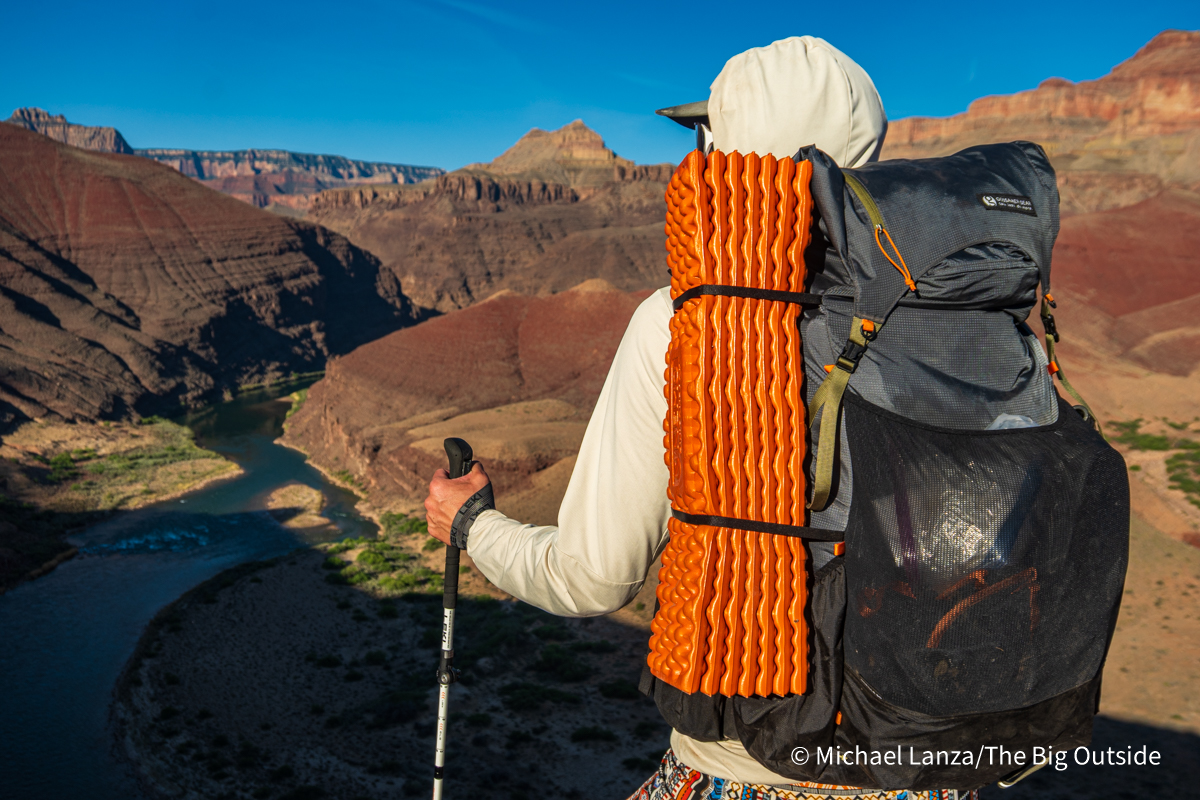
I’ve always drawn a line when it comes to ultralight backpacks: My backpack is arguably my most important piece of gear on a backpacking trip (it’s literally in the name!), and cutting ounces of weight from my pack delivers no improvement to how I feel if it’s uncomfortable to carry for hours or days. But that logic rests on the assumption that pack comfort requires those extra ounces—and carrying the Gorilla 50 on an arduous, five-day backpacking trip in the Grand Canyon [link] convinced me of this ultralight animal’s ability to comfortably carry everything I need for even that hard of a trip.

As I started my descent into the canyon, I had my Gorilla loaded with 30-35 pounds of gear: not only for camping, but also the food and gas for five days out, plus water for six hours of hiking under the hot desert sun. Despite weighing only two pounds, the Gorilla supported this load with no problem, remaining comfortable and stable. I found it quite impressive that the comfort and support of the Gorilla rivaled packs I’ve used that weighed twice as much—though the astute reader should note that I’m a fit, 180-pound, 25-year-old with no specific back or other physical issues, and anyone smaller, with back problems, or with more wear on their joints may find this pack’s max comfortable weight a bit lower than I do.
 Hi, I’m Michael Lanza, creator of The Big Outside. Click here to sign up for my FREE email newsletter. Join The Big Outside to get full access to all of my blog’s stories. Click here for my e-books to classic backpacking trips. Click here to learn how I can help you plan your next trip.
Gossamer Gear uses their PVT Frame System in the Gorilla: an ultralight aluminum frame that they say allows the hipbelt to pivot with your natural gait. This system also has the benefit of allowing you to swap in different hipbelt sizes and shapes (you can swap in straight or curved hipbelts and the process to do so proved quick and easy), making the Gorilla a great option for people with uncommon waist-to-torso ratios; I used the S/M curved hipbelt on my medium Gorilla. I believe this system contributed to the pack’s remarkable comfort; in particular, I noticed very little chafing from the shoulder straps (it only chafed when I was shirtless, and even then only slightly) and absolutely no chafing or pressure points on my hips, despite arguably pushing the pack’s comfortable weight capacity. The other nice thing about these hipbelts are their extra-large pockets, which are the largest I’ve ever seen on a pack and big enough to fit my 6.5×3-inch phone. While many factors influence fit, I’m willing to believe that this pivoting system has a meaningful impact on this pack’s comfort and weight capacity.
The carry system is rounded out by effective load lifters, comfortable S-curve shoulder straps, and a SitLight foam back pad, which allows some extra airflow (though not as much as a trampoline-style harness, which holds the pack off the back entirely), provides padding, and can be removed at camp to provide a sitting surface. When fully loaded with 30+ pounds of gear, the back of the pack does barrel (bulge outwards) slightly, even with the pad, but I didn’t find that this affected comfort negatively.
Sign up now for my FREE email newsletter.

The pack features a fold-over lid with an integrated zippered lid pocket, which I found spacious enough for all the small things that I’d normally put in a lid. The fold-over also allowed me to slightly overfill the pack and still get it closed, however, doing so reduces the water-resistant ability of the pack, which lacks a built-in pack cover or taped seams and would rely on tight folding of the nylon roll-top to keep water out of the top. A port just below the lid allows egress for a hydration hose (be careful around this port while swapping the hipbelt; I accidentally tore mine while pulling the frame up to get my hipbelt out), and while there is an internal hanger for a bladder, there is no separate bladder pocket, which I found slightly annoying from an organizational perspective (and in my opinion, unnecessary from a weight perspective).
On the exterior, two straps on each side plus medium-sized side pockets provide ample compression and ability to attach things to the side of the pack, and the side pockets are just large enough to fit a standard liter bottle. A large stretch-mesh pocket on the front of the pack provides an impressive amount of external space; I kept camp sandals, a roll of TP, and the fabric portion of my camp chair in mine, and I could’ve fit quite a bit more. At the bottom of the front of the pack sits an ice-axe loop (right side) and an adjustable cord for trekking-pole attachment (left side), both of which are only usable if the side strap above is free to hold the other side of the axe or pole. There are eight small nylon loops on the pack front which one could thread cord through to maximize dingle-dangles—but at that point, I’d recommend just using a larger pack.
Plan your next great backpacking trip in Yosemite, Grand Teton, and other parks using my expert e-guides.
Like any ultralight pack, the Gorilla does sacrifice many common features: there’s no access to the main compartment other than from the top, no interior organizational pockets, no bottom attachment straps, and the small buckles on the sides and front of the pack can be slightly fiddly to get engaged. The pack is made with 70- and 100-denier nylon, which should be durable enough but heavier packs typically use more durable fabric. Personally, none of those are features that I found myself missing, especially as long as I organized the pack well to have my during-the-day needs at the top of the pack.
Gossamer Gear Gorilla
The Verdict
If you can do without all the bells and whistles of the most generously featured (and heavier) packs on the market, the Gorilla excels as a practically designed and impressively comfortable ultralight backpack at a competitive price point.
BUY IT NOW
You can support our work on this blog, at no cost to you, by clicking this affiliate link to purchase the Gorilla at gossamergear.com.
See “The 10 Best Backpacking Packs” and “The Best Ultralight Backpacks,” “5 Expert Tips For Buying the Right Backpacking Pack,” and all reviews of backpacks,backpacking gear, ultralight backpacks, and ultralight backpacking gear at The Big Outside.
And don’t miss our popular reviews of “25 Essential Backpacking Gear Accessories” and “The Best Backpacking Gear” of the year.
—Nate Lanza
Note from Michael Lanza: An avid climber, backpacker, dayhiker, and backcountry and resort skier, Nate Lanza has been doing all of these since he was a preschooler; and as my son, he has over 20 years of experience on wilderness adventures. He is The Big Outside’s managing editor, writing stories about trips, reviewing gear, and continuing to spend as much time in the backcountry as he can. I tested gear for Backpacker magazine for 20 years. At The Big Outside, we review only what we consider the best outdoor gear and apparel. See The Big Outside’s Gear Reviews page for categorized menus of all gear reviews and expert buying tips.