Daypack
Gregory Kiro 24L
$120, 24L/1,465 c.i., 1 lb. 12 oz./793.8g
One non-adjustable unisex size
backcountry.com
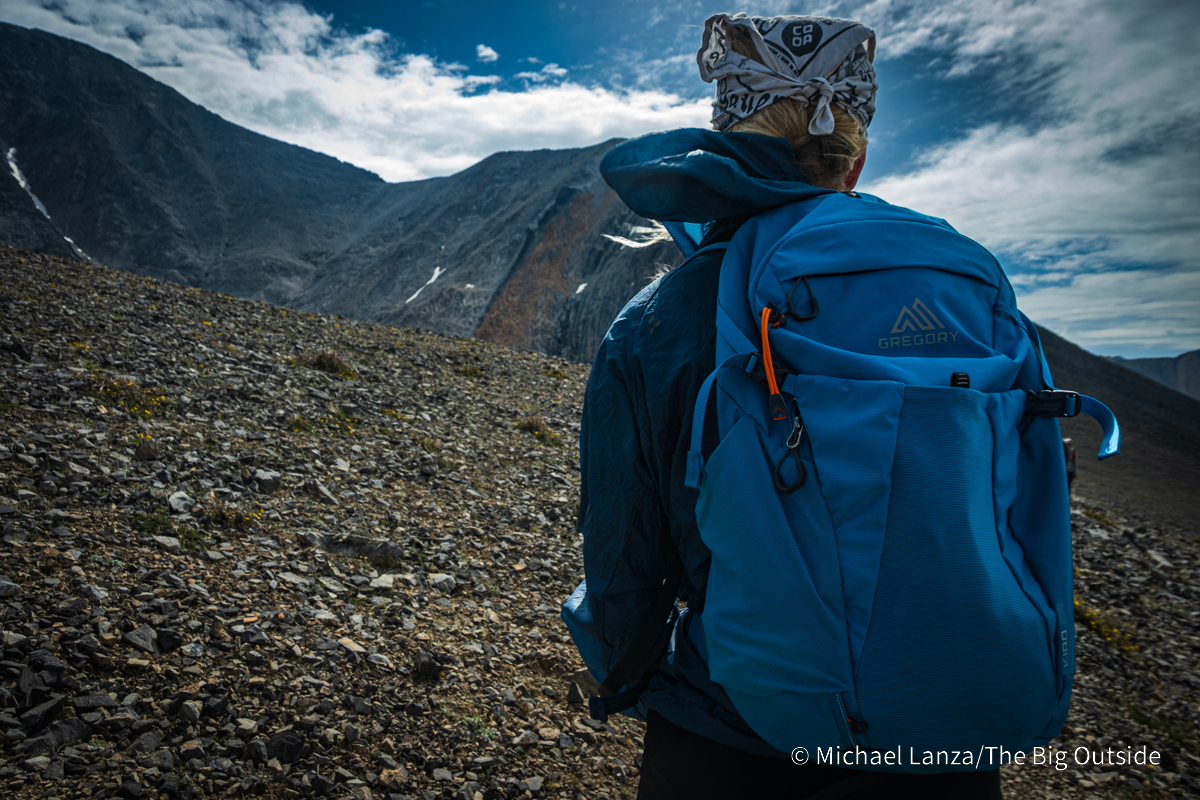
I can say this about Gregory’s Kiro 24L: I made a genuine effort to hike too far for its comfort limits, but I failed. From a 12-mile (19.3-kilometer), 4,400-foot (1,340-meter) dayhike in New Hampshire’s Southern Presidential Range in late May to a nine-mile (14.5-kilometer), more than 5,200-foot (1,600-meter) dayhike of 12,662-foot Borah Peak, Idaho’s highest, in July, and a roughly 19-mile (30.6-kilometer), 4,500-foot (1,370-meter) October dayhike and off-trail scramble up and down 10,716-foot Mount Cramer, the second-highest peak in Idaho’s Sawtooth Mountains, the Kiro 24 had the capacity and all-day comfort for it all.
While I carried the Kiro 24 with up to about 15 pounds/6.8 kilos inside in the Presidentials and on the Mount Cramer hike, my 22-year-old daughter carried it starting out with about the same weight inside on Borah Peak—allowing us to compare notes on the performance of this pack that comes in just one unisex size.
 Hi, I’m Michael Lanza, creator of The Big Outside. Click here to sign up for my FREE email newsletter. Join The Big Outside to get full access to all of my blog’s stories. Click here for my e-books to classic backpacking trips. Click here to learn how I can help you plan your next trip.


The most unique design feature of the Kiro 24 is the highly elastic CloudControl hipbelt, which stretches like a very wide and flat rubber band as you move. I confess to a skeptical initial reaction to it, wondering how a belt with zero rigidity and that much stretch can deliver the support and stability you’d typically look for in a daypack. But as I wore the pack more (and watched my daughter wearing it on steep trail and rugged scrambling on Borah Peak), the belt won me over: Its stretch results in the pack bag remaining relatively stable on your back, instead of bouncing around; and the more rugged and steep the terrain, the more pronounced the benefit. And as long as you don’t overload the pack (more on that below), its lack of rigidity isn’t detrimental.
The perforated, breathable, 3D foam back panel with gradient printed mesh and lightly padded shoulder straps provide adequate padding for light loads and breathe fairly well; but again, since there’s no rigidity in the hipbeltand no internal frame, just a back panel that easily folds in half, the design has inherent limits on weight capacity. Gregory says the pack carries 20 pounds/9.1 kilos comfortably. My daughter and I both found it comfortable with up to 15 pounds/6.8 kilos inside on big days (we didn’t load it any heavier), and I expect its comfort above 15 pounds would vary between users.
Find your next adventure in your Inbox. Sign up now for my FREE email newsletter.

Gregory says the Kiro packs fit torsos from 16 to 21 inches/40.6 to 53.3 centimeters and waists from 28 to 48 inches/71.1 to 121.9 centimeters. The waist measure seems accurate, and the pack fit my 18-inch/45.7-centimeter torso well; and my daughter, with a torso around 16 inches/40.6 centimeters, had no complaints on our big day hiking Borah Peak. Again, if you get this pack mostly for moderate dayhiking loads, the one unisex size will probably perform fine for many hikers whose torso length is not at either end of that fit range.
A clamshell zipper enables rapid access to the main compartment—supremely convenient and, I think, a smart design for a hiking daypack in this capacity and weight class. The pack’s 24-liter/1,465-cubic-inch capacity easily fit all the food and layers I needed for an October hike in the Sawtooths, where the temperature was 19° F when we started out and we had warm sunshine for most of the day.
The four external pockets are fewer than many daypacks of comparable capacity and weight, but the clamshell zipper access reduces the need for outside pockets, and the four on the Kiro are strategically placed and designed.
I can help you plan the best backpacking, hiking, or family adventure of your life.
Click here now to learn more.


The stretch-mesh front drop-in pocket has space for a jacket and other items. The stretch-mesh left side pocket holds a liter bottle, although it’s not easy to reach into that pocket while wearing the pack. The zippered top pocket is good for smaller items like keys and a hard case for sunglasses. The zippered right-side pocket provides additional secure external storage for electronics, gloves, hat, snacks, etc.—but short of having a double-jointed shoulder, it’s not possible to reach that pocket’s vertical zipper while wearing the pack.
That spotlights the only demerit regarding external pockets: With no hipbelt pockets, there’s just one pocket marginally within reach while wearing the pack.

The pack body is made with 210-denier, high-density, 37 percent recycled nylon and the bottom with 420-denier, high-density, 40 percent recycled nylon, all with a zero-fluorocarbon DWR (durable, water-resistant coating) and no PFAS.
As usual, Gregory is strong on the little details. The internal hydration sleeve with SpeedClip hydration hanger is compatible with Gregory’s Hydro reservoirs (reservoir not included). Custom-molded ring zipper pulls are easy to grab wearing gloves. There’s also good side compression to reduce the pack when underfilled and trekking pole attachments on the front. Other models in the series are the Kiro 20L and Kiro 28L.
You live for the outdoors. The Big Outside helps you get out there.
Join now to read ALL stories and get a free e-book!
Gregory Kiro 24L
The Verdict
With a unique, very stretchy hipbelt and easy access, the Gregory Kiro 24L stands out as an ideal daypack for a wide range of hikes—light enough for short outings and with adequate space and weight capacity for all-day hikes.
BUY IT NOW
You can support my work on this blog, at no cost to you, by clicking any of these affiliate links to purchase a Gregory Kiro 24L or another Kiro model at backcountry.com, rei.com, or gregory.com.
See my picks for “The 10 Best Hiking Daypacks” and my “5 Tips For Buying the Right Backpack” (which includes daypacks) and all reviews of hiking gear at The Big Outside.
You may also be interested in my “8 Pro Tips for Preventing Blisters When Hiking,” my picks for “The Best Trekking Poles,” and my story “How to Know How Hard a Hike Will Be,” which you can read in its entirety with a paid subscription to The Big Outside or click here to purchase separately.
NOTE: I reviewed gear for Backpacker magazine for 20 years. At The Big Outside, I review only what I consider the best outdoor gear and apparel. See The Big Outside’s Gear Reviews page for categorized menus of all gear reviews and expert buying tips.
—Michael Lanza