Trekking Poles
Leki Makalu Cork Lite Trekking Poles
$160, 1 lb. 1.9 oz./508g (per pair)
One size, adjustable 100-135cm/39.4-53 ins.
backcountry.com
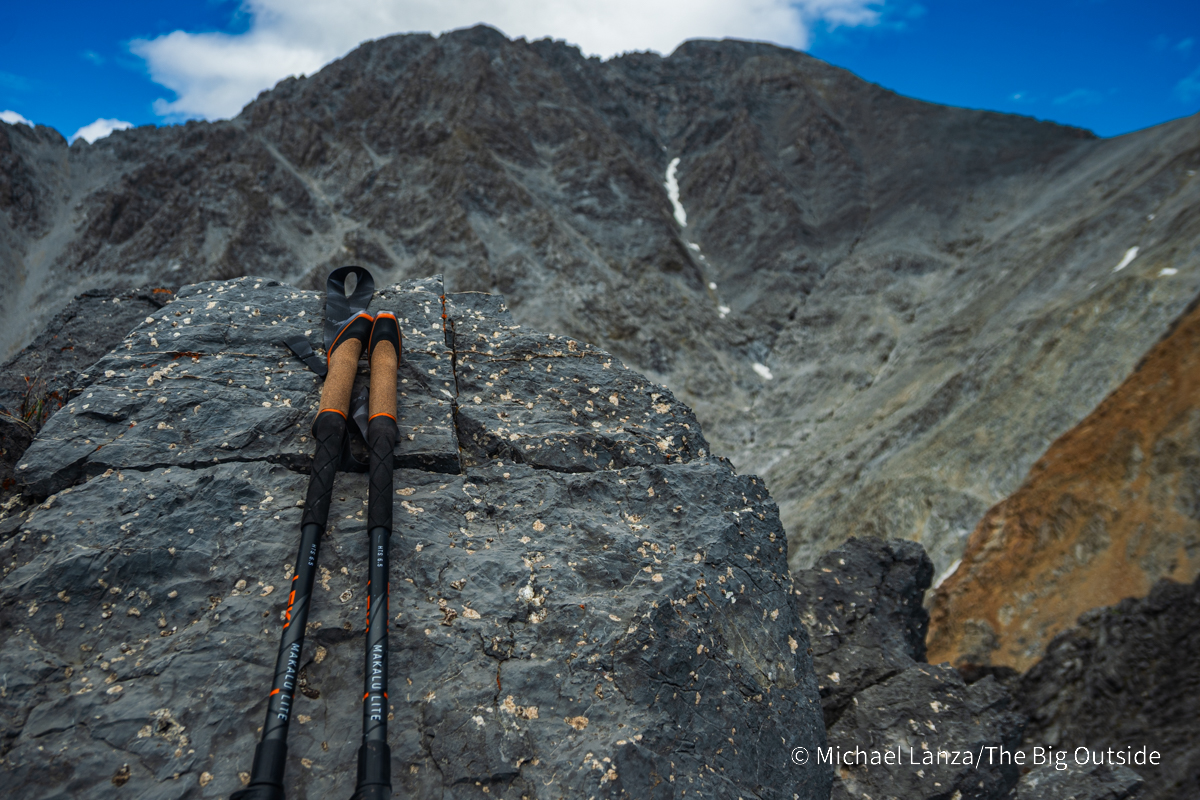
The first detail to catch your attention with the Leki Makalu Cork Lite Trekking Poles is likely going to be the price—it’s significantly lower than many leading models of hiking poles. But look deeper into the specs and these poles grow more appealing, including a broad range of adjustability and very good durability. From hiking Idaho’s highest peak and in my local foothills to dayhikes and backpacking in southern Utah’s Capitol Reef National Park and Buckskin Gulch and Paria Canyon, these poles performed and held up in ways that convinced me they may be the best value in trekking poles today.
Borah Peak, Idaho’s high point at 12,662 feet, put these poles to the test as much as my legs: The standard route ascends 5,262 feet in 4.1 miles from trailhead to summit (8.2 miles up and down), or almost 1,300 feet per mile, a relentlessly steep hike where I leaned hard on these poles going uphill and on the endless, quad-pounding descent. I used them on a very similar two-lap training hike of a favorite hike in my local Boise Foothills called Cervidae Peak, where the trail ascends about 2,000 vertical feet in just 2.2 miles; two laps made it about 8.5 miles and nearly 4,000 feet, and I had no slips on the steep descents of pebbly and sandy trail.
 Hi, I’m Michael Lanza, creator of The Big Outside. Click here to sign up for my FREE email newsletter. Join The Big Outside to get full access to all of my blog’s stories. Click here for my e-books to classic backpacking trips. Click here to learn how I can help you plan your next trip.

I also used these poles on a 10-mile dayhike in Capitol Reef National Park (Grand Wash, Frying Pan Trail, Cohab Canyon) and an overnight backpacking trip in Buckskin Gulch and Paria Canyon, starting with about 40 pounds, including eight liters (17 pounds) of water.
For starters, these three-section, telescoping/collapsible poles extend to as broad a range of lengths for hiking as you will find in trekking poles: 100 to 135 centimeters/39.4 to 53 inches—accommodating virtually every user from adults well over six feet tall to young kids because the poles are useable even when adjusted shorter than 100 centimeters.
Plus, they are long enough to use with tents that pitch with trekking poles, which is not the case with many trekking poles, which either are not long enough for those tents (which usually require a pole that extends to 130 to 135 centimeters), or come in different adjustable sizes, with no size that accommodates both shorter or even average-height hikers and tents that pitch with trekking poles.
Plan your next great backpacking trip on the Wonderland Trail, Teton Crest Trail,
in Yosemite or other parks using my expert e-books.

The SpeedLock+ adjustment levers have proved very reliable, never slipping on me, even on long, steep descents like Borah Peak, and the tension on them is easily adjusted using fingers—no tool required (as with some other poles, which has always struck me as an annoying and unnecessary design shortcoming).
The Makalu Cork Lite Trekking Poles have two weak points. First, the collapsed length of 67 centimeters/26.4 inches ranks them among the longest telescoping poles when packed (which are much less packable than folding poles). Still, you can attach them to the outside of a backpacking pack without them getting in the way; and you can certainly throw them onto a daypack, but they will simply stick out above the top of most daypacks.
Second, their weight of 17.9 ounces/508 grams per pair ranks them among the heaviest hiking poles—but that also translates to high durability, thanks to the all-aluminum shafts.
Find your next adventure in your Inbox. Sign up now for my FREE email newsletter.


While these poles aren’t the likely choice of ultralight backpackers or dayhikers, that weight isn’t really a deal-breaker for many typical backpackers, hikers, and others.
Lastly, the ergonomic, Aergon Air Thermo cork grips feel comfortable, including the large knob on top for resting palms on when going downhill, and foam grips extend down the upper shaft, ideal for ascending very steep trails, off-trail terrain, or backcountry touring. The easily adjustable nylon straps are comfortable on my wrists for hours and the poles have the usual carbide tips found on all high-quality trekking poles.
I’ve helped many readers plan unforgettable backpacking and hiking trips.
Want my help with yours? Click here now.
Leki Makalu Cork Lite Trekking Poles
The Verdict
Although not very packable and a bit heavy, the Leki Makalu Cork Lite Trekking Poles have a broad and versatile range of adjustability, excellent durability—and a highly competitive price compared with many of the best models, making them an appealing choice for backpackers, dayhikers, climbers, and other users.
BUY IT NOW
You can support my work on this blog, at no cost to you, by clicking any of these affiliate links to purchase the Leki Makalu Cork Lite Trekking Poles at backcountry.com or lekiusa.com.
See my picks for “The Best Trekking Poles” and my stories “How to Choose Trekking Poles” and “10 Best Expert Tips for Hiking With Trekking Poles,” and all reviews of backpacking gear, ultralight backpacking gear, and hiking gear at The Big Outside.
And don’t miss my popular reviews of “25 Essential Backpacking Gear Accessories” and “The Best Backpacking Gear” of the year.
Whether you’re a beginner or seasoned backpacker, you’ll learn new tricks for making all of your trips go better in my stories “How to Know How Hard a Hike Will Be,” “How to Plan a Backpacking Trip—12 Expert Tips,” and “A Practical Guide to Lightweight and Ultralight Backpacking.” With a paid subscription to The Big Outside, you can read all of those three stories for free; if you don’t have a subscription, you can download the e-book versions of “How to Plan a Backpacking Trip—12 Expert Tips,” the lightweight and ultralight backpacking guide, and “How to Know How Hard a Hike Will Be.”
NOTE: I tested gear for Backpacker magazine for 20 years. At The Big Outside, I review only what I consider the best outdoor gear and apparel. See The Big Outside’s Gear Reviews page for categorized menus of all gear reviews and expert buying tips.
—Michael Lanza