Trekking Poles
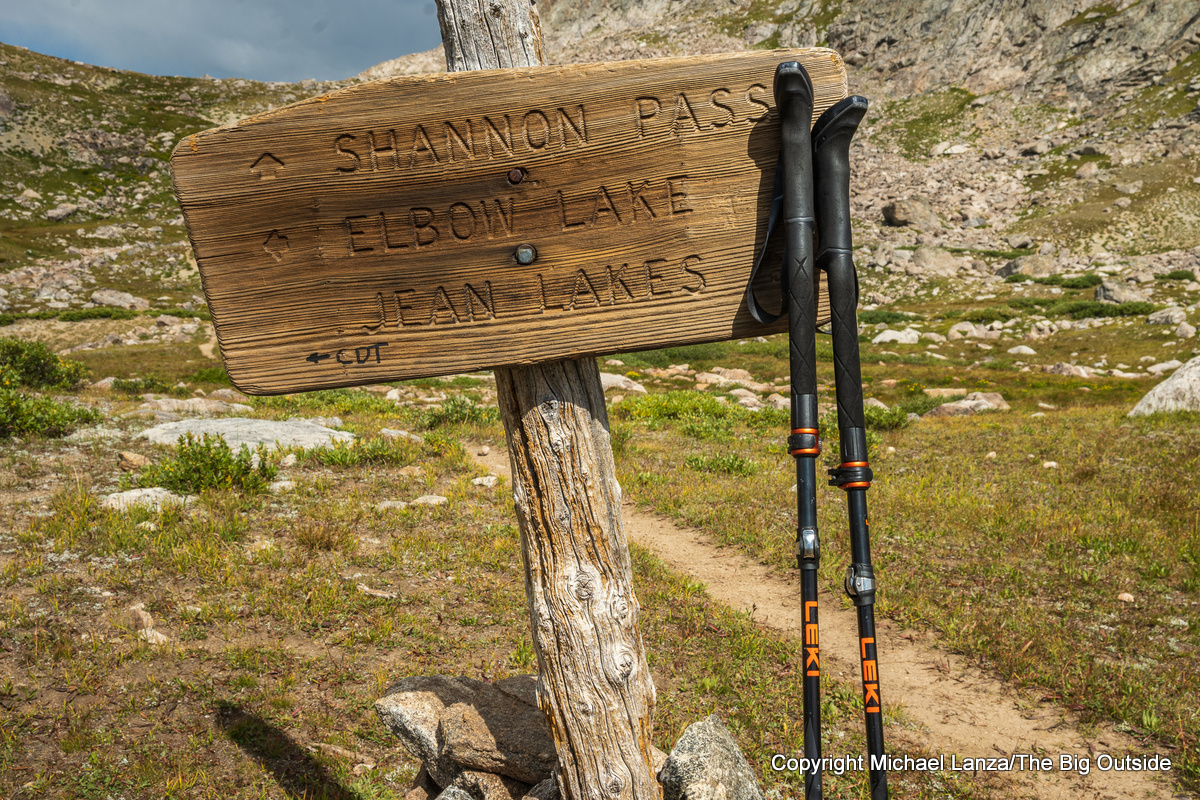
Leki Makalu FX Carbon Poles
$230, 1 lb. 1.9 oz./508g (per pair)
One size, adjustable 110-130cm/43.3-51.2 ins.
backcountry.com
What qualities are you looking for in trekking poles? How about good adjustability, packability, durability, comfort, reliability, and especially versatility? Those adjectives all describe the Leki Makalu FX Carbon folding poles—which I increasingly found myself reaching for when choosing poles for backpacking trips in places as rugged as the Wind River Range, High Sierra, Canadian Rockies, High Uintas, and more. In fact, I can point to just one drawback to them—although in this case, I question whether it can even be called that.
 Hi, I’m Michael Lanza, creator of The Big Outside. Click here to sign up for my FREE email newsletter. Join The Big Outside to get full access to all of my blog’s stories. Click here for my e-books to classic backpacking trips. Click here to learn how I can help you plan your next trip.

I’ve used the Makalu FX Carbon poles on a six-day, 64-mile hike through the Wind River Range with an ultralight tent that pitches with trekking poles, and a previous five-day, 43-mile hike in the Winds; a four-day, 38-mile backpacking trip in Idaho’s Sawtooths, including several miles of off-trail hiking that involved a fair bit of large, loose talus and scree; a nine-day hike of nearly 130 miles through the High Sierra, mostly on the John Muir Trail with some off-trail detours off it, starting with 18 pounds of food and a pack tipping a bit over 40 pounds; a four-day, 60-mile hike in Utah’s High Uintas Wilderness; three-day hikes on both the Skyline Trail in Jasper National Park and the Nigel, Cataract, and Cline Passes Route in the Canadian Rockies, plus dayhikes in those parks; and on three-day backpacking trips on a section of the Arizona Trail and in Arizona’s Aravaipa Canyon.
For starters, these adjustable, three-section, folding poles extend to a length range that will accommodate most users: 110 to 130 centimeters/43.3 to 51.2 inches. Length adjusts using a simple push-button mechanism to release tension on the pole and Speedlock 2 Plus lever locks that never failed, even in rugged terrain. The lever’s tension easily adjusts by turning a tiny dial with your fingers, no tool required.
Plus, their max length of 130 centimeters make them usable with many tents that pitch with trekking poles—and that is not the case with many trekking poles, which either are not long enough for those tents (which usually require a pole that reaches 130 to 135 centimeters), or they come in different adjustable sizes, with no size that accommodates both shorter or even average-height hikers and tents that pitch with trekking poles. I pitched my ultralight Hyperlite Mountain Gear Mid-1 using these poles for five nights in the Winds and it remained very stable in strong gusts some evenings.
The collapsed length of 40 centimeters/15.7 inches ranks them only slightly longer than the most packable folding poles (which are all far more packable than telescoping poles). That means you can attach them to the outside of any backpacking pack or daypack without them getting in the way and they readily fit even in carry-on luggage.
Plan your next great backpacking trip on the Wonderland Trail, Teton Crest Trail,
in Yosemite and other parks using my expert e-books.

The weight of the Makalu FX Carbon—17.9 ounces/508 grams per pair—places them in a category with the heaviest hiking poles. But they are more durable than lighter poles, a selling point in rocky terrain and to backpackers who use trekking-pole tents. Backpacking in Idaho’s Sawtooths, I leaned hard on these poles during an off-trail crossing of a steep slope consisting of large, loose talus and scree, and they didn’t fail me. Also, the carbon shafts strike a balance between good durability while maintaining a lower weight than would be the case with aluminum (which is generally more durable).
Plus, the Makalu FX Carbon have such comfortable, extended Aergon Air foam grips—thanks in part to the oversized head (or top) of the pole, very helpful on steep and/or long descents—that they swing easily and seem to feel lighter than they are. I don’t think ultralight backpackers and hikers would be disappointed with these sticks (though I wouldn’t recommend them to mountain runners—too heavy for that). They also have easily adjustable wrist straps.
Lastly, a key point: Precious few folding poles—all sharing the advantage of being very packable—possess the adjustability to serve the needs of a wide range of user sizes and can be used with trekking-pole tents. Lighter folding poles may be more susceptible to breaking.
These poles also have the usual carbide tips found on all high-quality trekking poles.
The aluminum Leki Makalu Cork Lite Trekking Poles weigh exactly the same as the Makalu FX Carbon Folding, but have a collapsible/telescoping design and cost $70 less.
Find your next adventure in your Inbox. Sign up now for my FREE email newsletter.

Leki Makalu FX Carbon Trekking Poles
The Verdict
While they’re among the heavier trekking poles out there, the Leki Makalu FX Carbon poles achieve a rare degree of versatility by combining the excellent packability of folding poles with an adjustability range that suits many users and the durability and length for using with trekking-pole tents. For that, these poles will appeal to a variety of backpackers, dayhikers, climbers, and others.
BUY IT NOW
You can support my work on this blog, at no cost to you, by clicking any of these affiliate links to purchase the Leki Makalu FX Carbon trekking poles at backcountry.com or lekiusa.com.
See my picks for “The Best Trekking Poles” and my stories “How to Choose Trekking Poles” and “10 Best Expert Tips for Hiking With Trekking Poles,” and all reviews of backpacking gear, ultralight backpacking gear, and hiking gear at The Big Outside.
And don’t miss my popular reviews of “25 Essential Backpacking Gear Accessories” and “The Best Backpacking Gear” of the year.
I’ve helped many readers plan unforgettable backpacking and hiking trips.
Want my help with yours? Click here now.
Whether you’re a beginner or seasoned backpacker, you’ll learn new tricks for making all of your trips go better in my stories “How to Know How Hard a Hike Will Be,” “How to Plan a Backpacking Trip—12 Expert Tips,” and “A Practical Guide to Lightweight and Ultralight Backpacking.” With a paid subscription to The Big Outside, you can read all of those three stories for free; if you don’t have a subscription, you can download the e-book versions of “How to Plan a Backpacking Trip—12 Expert Tips,” the lightweight and ultralight backpacking guide, and “How to Know How Hard a Hike Will Be.”
NOTE: I tested gear for Backpacker magazine for 20 years. At The Big Outside, I review only what I consider the best outdoor gear and apparel. See The Big Outside’s Gear Reviews page for categorized menus of all gear reviews and expert buying tips.
—Michael Lanza